 TrustATrader
Practical Guide For Nottingham Bay Windows
Imagine a Victorian bay in The Park Estate: morning sun floods the room, passers-by walk close to the pavement and a radiator sits under the sill. If you’re a homeowner in Nottingham with a street-facing bay, this guide helps you choose blinds or shutters that balance privacy, warmth and light. In our experience, the right fabric, framing and fit make more difference than the fanciest finish. Read on for clear comparisons, practical measuring tips and how Best Blinds handles surveys and installation.
Best Blinds is a local, family-run team offering free home visits, accurate measuring and expert fitting. For company background and the simple steps from survey to install, see our About Us and How Our Made To Measure Blinds Service Works.
Key Considerations Before You Choose
A common issue we see is choosing a style without thinking about sash gaps, radiator placement or how the bay is used day-to-day. Street-facing bays need daytime privacy without turning the room dark. Older sash frames can be draughty and prone to condensation. Measure for handles, sill depth and any curved plaster so the final fit looks clean.
If you’re concerned about bills, choose thermal interlinings or cellular fabrics. For living spaces, light-filtering materials soften glare while keeping a view. For practical tips on thermal performance, read our energy saving benefits of modern blinds.
What Most People Get Wrong
Many assume a single blind across the whole bay is neater. In our experience, separate blinds per facet often give better light control, less strain on fittings and easier access to radiators and handles.
When This Doesn’t Apply
If your bay is in a listed or tightly preserved conservation area, there may be restrictions on visible fixings or painted finishes. Check local restrictions before deciding on external-looking shutters or non-reversible alterations.
Quick Checklist
- Measure each facet and note handles, sills and radiators
- Decide whether daytime privacy or total blackout is priority
- Choose fabrics with thermal interlining for colder rooms
- Consider motorisation for tall or deep bays
Roman Blinds: Soft Warmth And Period Style
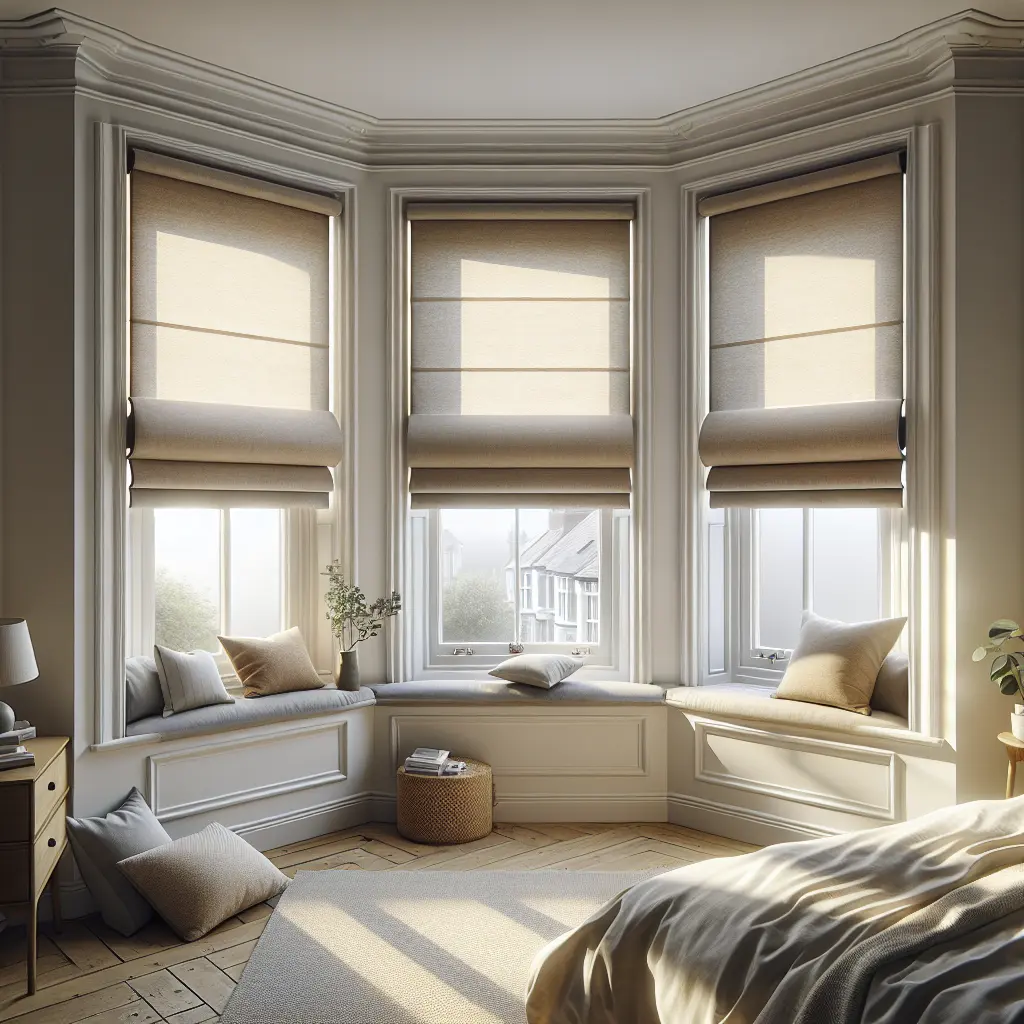
Romans work well in Victorian and Edwardian rooms, adding tailored texture that complements sash frames. In our experience, cottons and velvets with thermal interlining noticeably improve comfort. Allow for stack height so folds clear the sill and radiators. Child-safety devices are fitted to cords, and battery motor options remove trailing cords for a tidy finish.
For care, vacuum with a soft brush and spot clean. See our Roman Blinds for fabrics and linings suitable for bay windows.
Venetian Blinds: Flexible Street-Facing Privacy
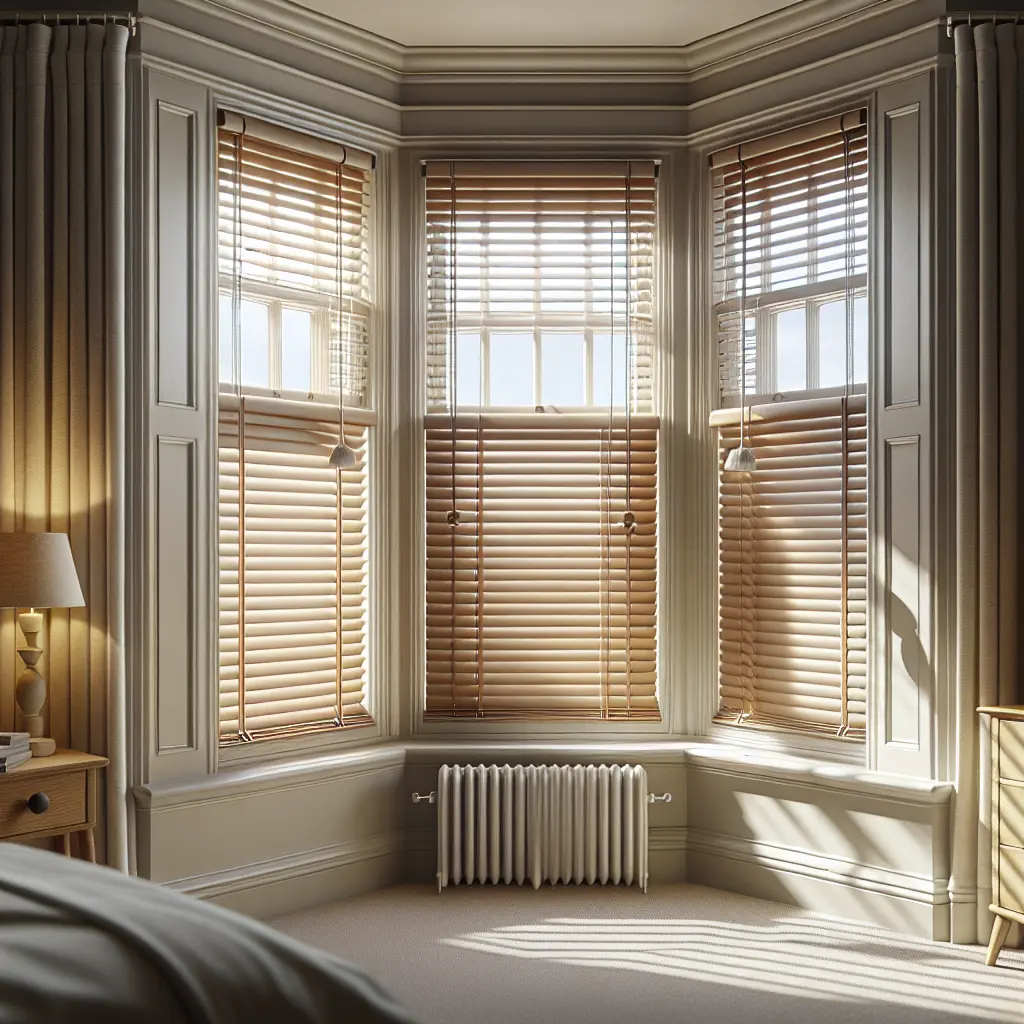
Venetians let you tilt slats for privacy while keeping daylight. Real wood matches period interiors; faux wood suits kitchens and bathrooms where moisture is an issue. Aluminium offers a slim, modern look and is often the most budget-friendly. Slat widths of 35–50 mm typically sit in proportion with larger bays.
We recommend matching colours to architraves or sash bars for a built-in appearance. Explore our Venetian blinds range to compare finishes and slat sizes.
This image was generated with AI and may not always represent the product or service exactly.
Perfect Fit Blinds: Neat No-Drill Control
Perfect Fit frames clip into modern uPVC beading, avoiding drilling and reducing light gaps. In our experience they work best on consistent, modern frames; older timber sashes often lack the required rebate. Choose pleated or cellular fabrics for insulation, or day & night systems for mixed use.
For more detail on suitability and installation options, see our Perfect Fit blinds guide.
Shutters For Timeless Looks And Insulation
Shutters give strong insulation and a classic finish. Café style covers the lower sash for daytime privacy while full-height improves light control and warmth. Tier-on-tier offers separate top and bottom panels for flexibility on busy streets. PVC shutters suit wet rooms; painted timber is better for living rooms and bedrooms.
Measuring angled bays is precise work; in our experience accurate templates are the difference between a snug fit and awkward gaps. See our shutters range for materials and styles.
Measuring And Fitting Bays: What To Expect
We begin with a free home visit. We check angles, frame depth, light gaps and allow for sills, handles and radiators. Your quote is itemised and clear. On fitting day our team protects floors, routes any cables neatly and installs child-safety devices. Most blind installs are quick; shutters take longer because of bespoke crafting and finishes.
If you’d like to book, Best Blinds brings samples and measures precisely to avoid surprises.
This image was generated with AI and may not always represent the product or service exactly.
Room-By-Room Picks For Nottingham Homes
Living rooms on busy streets often suit café shutters or Venetians for privacy with daylight; Romans add softness in snug lounges. Bedrooms benefit from Roman blackout linings or full-height shutters for insulation. Kitchens and bathrooms usually do best with faux wood Venetians or PVC shutters to handle steam and splashes. For home offices, day & night fabrics or Venetians help control screen glare.
Insulation And Noise: Practical Improvements
To boost warmth, add thermal interlining to Roman blinds or choose cellular fabrics in Perfect Fit frames. Shutters create an insulating air gap and layering blinds with curtains traps more warm air. Soft, lined treatments also cut echo and reduce traffic noise in terraced streets. Ask us about fabric weights and linings suitable for your glazing and room use.
Costs, Lead Times And How To Book A Free Survey
Costs vary by window size, fabric and style. Blinds are typically quicker to make; shutters need more time to craft and finish. With Best Blinds you get transparent pricing, local aftercare and a tidy install. Book a free survey and we’ll bring relevant samples, measure each facet and provide a clear, no-pressure quote.
FAQs
Which Option Reduces Heat Loss The Most In A Sash Bay?
Shutters and cellular blinds with thermal linings are most effective. Shutters create a rigid air gap; cellular fabrics trap air in pockets. In our experience combining a blind with curtains delivers the best improvement.
Can I Combine Shutters And Blinds In One Bay?
Yes. Layering can add insulation and flexible light control. We measure so both operate without obstruction and align visually with sash bars and rails.
Are Motorised Blinds Worth It For Tall Or Hard-To-Reach Bays?
Yes. Motorisation is a practical choice for tall bays or where cords would be awkward. Battery options avoid visible wiring and are straightforward to maintain.
Will Fitting Affect Homes In Conservation Areas Or Listed Buildings?
Sometimes. If your home is listed or in a conservation area, check local planning guidance first. We advise on minimally invasive fittings and reversible options that respect historic fabric.
How Long From Survey To Fit?
Lead times depend on product: most blinds are quicker to produce; bespoke shutters take longer. We give estimated lead times with your quote and keep you informed throughout.