 TrustATrader
Made-To-Measure Blinds For Bay Windows In Nottingham: Practical Local Advice
Imagine a street-facing bay on a Nottingham terrace: morning sun floods the room, passing traffic makes privacy a problem, and a radiator under the sill sends out unwanted heat. If you’re fitting blinds to a bay in Beeston, West Bridgford or across Nottingham, this guide is for you. In our experience fitting dozens of local bays, we explain how to identify bay types, measure accurately, choose between Romans, Venetians, Verticals and shutters, and handle sills, radiators and tricky angles. You’ll leave knowing the best practical choices and the next steps to get a tidy, long-lasting finish.
A common issue we see is homeowners buying the wrong fit or fabric and then needing refitting. Best Blinds offers free home visits, careful advice and expert fitting to avoid that. Learn more about our local team at https://best-blinds.co.uk/about-us/ and how our made-to-measure service works at https://best-blinds.co.uk/how-our-made-to-measure-blinds-service-works/.
Identify Your Bay Type — Splay, Box Or Curved
Most Nottingham bays are splay (angled sides), box (square) or curved. Note features that affect fit: a deep sill, side returns, window handles, picture rails and radiators under the window. A radiator changes where brackets can sit and how far the blind must project while handles dictate clearance and stacking height.
One face-fit blind across the whole bay can hide joins and look crisp if there’s headroom. Recess-fitting separate blinds to each facet follows the frame lines and reduces clutter. If you want product comparisons, see roller vs venetian vs vertical guidance at https://best-blinds.co.uk/roller-vs-venetian-vs-vertical-blinds/.
How To Measure A Bay Window (Step-By-Step)
Take a steel tape, notepad, pencil and a small card template for awkward joins. Measure in millimetres and note every figure immediately. In our experience precise notes save time on site and prevent costly reorders.
- Measure each facet width at top, middle and bottom; record the smallest measurement.
- Measure the drop from the fixing point to the sill or to where you want the blind to finish.
- Use a card template for corner angles and diagonals so tracks or headrails sit flush.
- Check projection for handles, tiles or taps so the blind clears them when operated.
- Note picture rails, coving and radiators that will affect bracket positions or bracket length.
Allow for light gaps at internal angles and small deductions for inside-fit blinds so they move freely. For size rules, see guidance at https://best-blinds.co.uk/how-much-smaller-should-inside-blinds-be-than-the-window/ — or book a measure if you prefer a pro to take the figures.
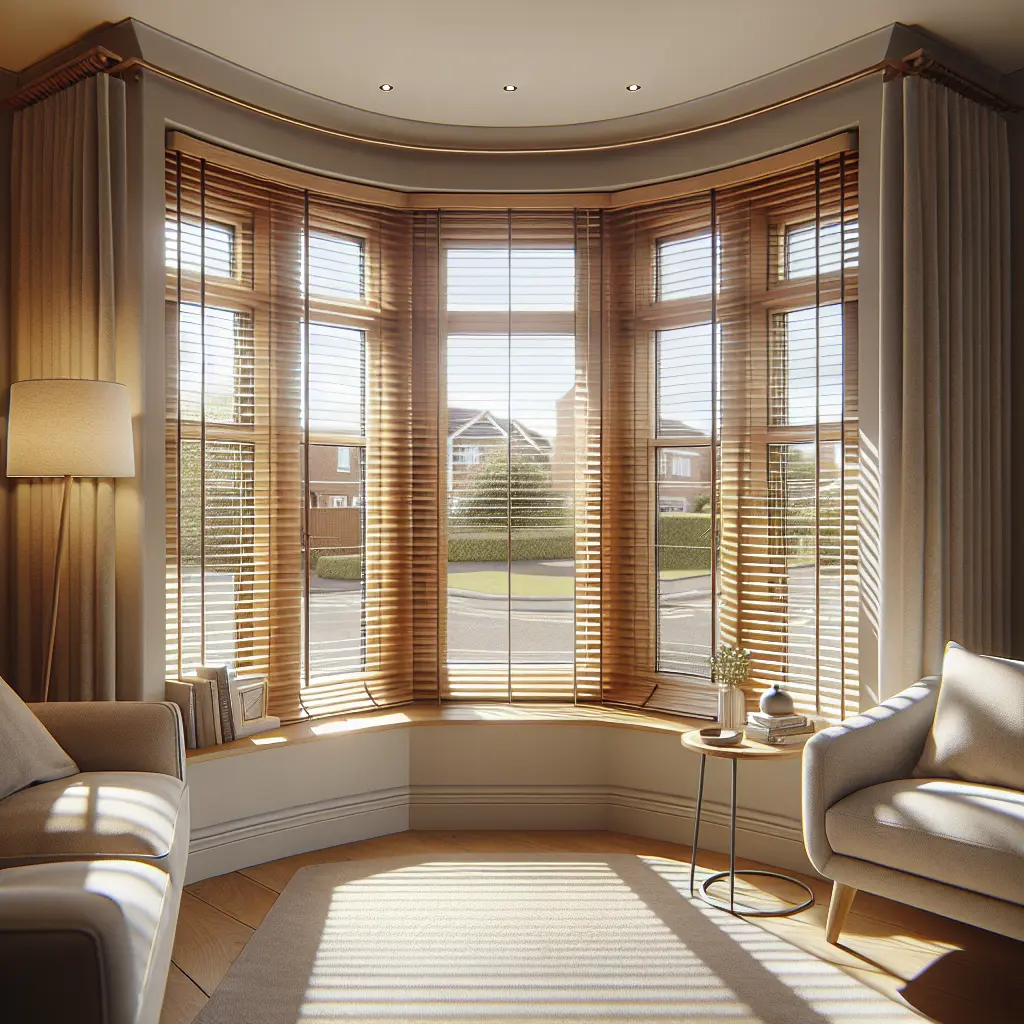
This image was generated with AI and may not always represent the product or service exactly.
Fitting Positions, Brackets And Tricky Bays
Decide between top-fixing into the lintel or face-fixing onto the frame or wall. Timber is straightforward; for masonry use correct plugs. A continuous headrail or a shutter frame reduces light gaps but needs a solid top fixing and careful scribing on out-of-square reveals.
If handles, tiles or radiators interfere, use spacer blocks, longer brackets or move the headrail forward. Where drilling uPVC isn’t wanted, Perfect Fit frames clip to the bead and avoid drilling—read the guide at https://best-blinds.co.uk/perfect-fit-blinds-a-complete-guide-for-uk-homes/ for more on non-invasive options.
Compare Your Options: Roman, Venetian, Vertical And Shutters
Roman blinds add softness and thermal benefit — pair with curtains for extra insulation. Venetians give fine privacy control; real wood suits period homes while faux wood or aluminium resists heat near radiators. Verticals work well on wide or curved bays; curved tracks cut light gaps. Shutters excel at light-gap control and draught reduction and often pay back in comfort for street-facing rooms.
Room-By-Room Choices: Fabrics, Finishes And Lining
Living Rooms: wooden Venetians or Romans with interlining add character. Bedrooms/Nurseries: blackout Romans, rollers or shutters for sleep. Kitchens/Bathrooms: choose moisture-resistant materials such as aluminium Venetians, PVC shutters or wipe-clean rollers. For draughty bays, thermal interlining and tighter-fitting shutters reduce heat loss and bills.
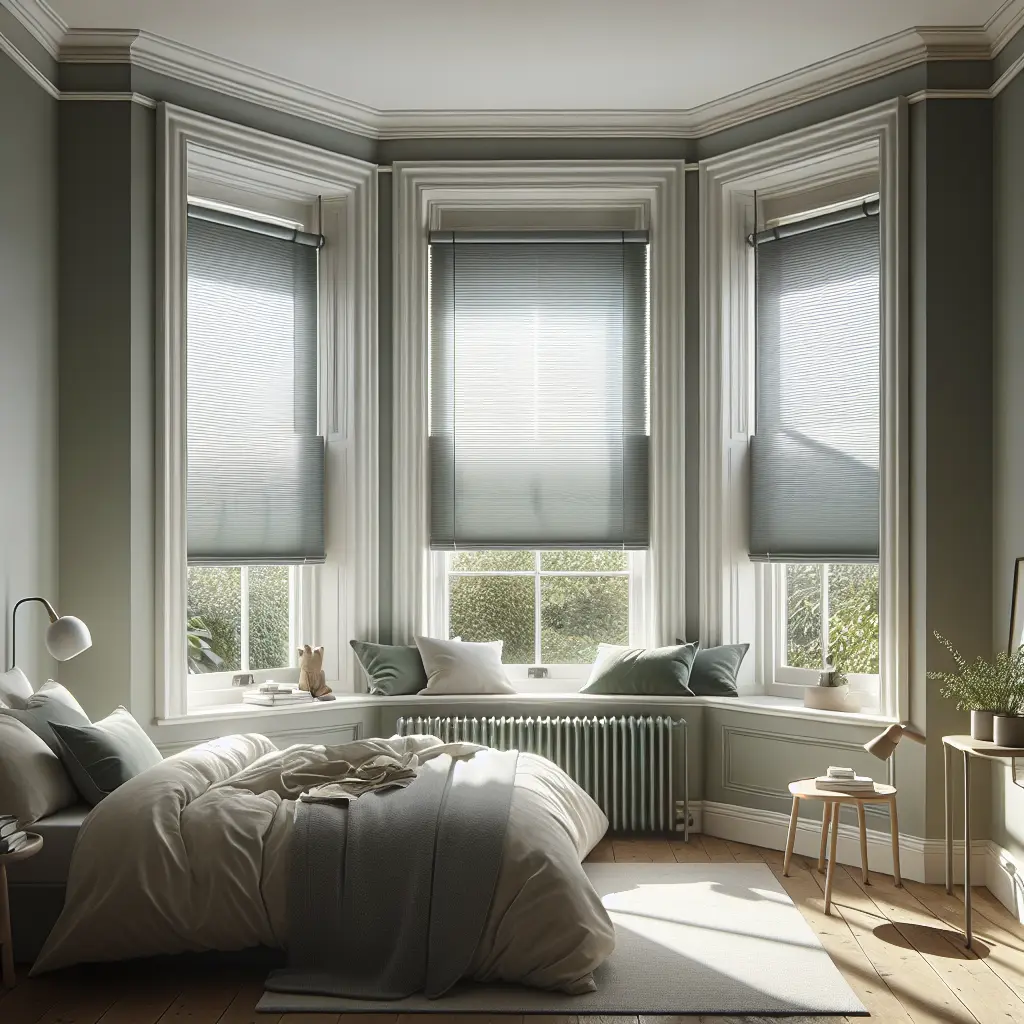
This image was generated with AI and may not always represent the product or service exactly.
Motorisation, Safety And Maintenance
Motorised systems are a practical upgrade for multi-facet bays. Battery-powered motors are neat and recharge, while mains is better for frequent use; see practical notes at https://best-blinds.co.uk/do-motorised-blinds-have-to-be-plugged-in/. We fit compliant safety devices, tidy cleats and cordless options where possible.
Maintain Venetians with a microfibre cloth and vacuum fabric blinds on low with a brush. Spot-clean fabrics as the supplier recommends and prefer wipe-clean materials in wet rooms.
Shutters For Bays — Why They’re Different
Shutters reduce light gaps and draughts more effectively than most blinds. Tier-on-tier suits sash-style bays and café style preserves daylight while protecting privacy below. For angled bays, accurate templates and careful scribing are essential to square up an out-of-true reveal and get a neat finish.
What Most People Get Wrong
Most people order on appearance alone and overlook projection and stacking. That leads to blinds that hit handles or stack too high under a picture rail. In our experience measuring first and checking clearances avoids reorders and compromises.
When This Doesn’t Apply
If your bay is a modern, factory-curved aluminium structure with integrated blinds or if planning permission limits external changes, some bespoke options (like large external shutters or continuous headrails) may not be suitable. Check constraints before ordering.
Our Made-To-Measure Process For Bays
Book a free home visit in Nottingham, Beeston or West Bridgford. We bring samples, measure each facet, advise on sills, returns and radiators and give a clear, no-pressure quote. Once you approve, we confirm lead times, install and set up safety devices, then explain care routines. Full process details at https://best-blinds.co.uk/how-our-made-to-measure-blinds-service-works/.
Prices, Budgets And Honest Value
Costs depend on the number of facets, product type, fabric, lining and motorisation. Romans with thermal lining and bespoke Venetians sit mid-to-high; Verticals or faux wood can be budget-friendly. Invest where it pays — shutters for draughty, front-facing bays or motorisation for convenience. We’ll show options at different price levels so you can choose with confidence.
Quick Checklist
- Identify bay type and note sills, returns, radiators and handles.
- Take top/mid/bottom measurements and template any odd angles.
- Decide inside vs face fit, material and whether to motorise.
- Book a free measure for a precise quote and fit.
Ready to proceed or need friendly local advice? Contact Best Blinds at https://best-blinds.co.uk/contact-us/ and we’ll guide you through options and timings.
FAQs
Can I Mix Different Blind Types Across A Bay?
Yes. Mixing works well — for example Roman on a central facet with slim Venetians on sides — but pick matching colours and stack heights so the overall look is cohesive. We can mock up finishes during a home visit.
How Long Will My Bay Installation Take?
Typical installations for made-to-measure blinds take 1–3 hours depending on the number of facets and product. Shutters and complex frames can take longer; we confirm timings when we book.
Is Drilling Into uPVC Always Necessary?
No. We only drill if it’s the best, most secure solution and you approve. Alternatives include top-fixing into the lintel or using Perfect Fit frames that clip to the bead and avoid drilling uPVC altogether.
Will Blinds Work If My Bay Is Out Of Square?
Yes. We template angles and use appropriate brackets or bespoke frames to achieve a neat finish. Shutters often require careful scribing but produce excellent light-gap control on wonky reveals.
Can Blinds Help Reduce Street Noise?
They can. Thicker fabrics, interlining and shutters absorb and block some sound; layering blinds with heavy curtains will improve results further in front-facing rooms.