 TrustATrader
Victorian Bay Windows In Nottingham: What Matters Most
Nottingham’s Victorian bays are a joy: tall sash windows, deep sills and ornate architraves that deserve careful treatment. The priorities are clear:
- Keep natural light and views.
- Protect daytime privacy on street-facing bays.
- Improve insulation and reduce draughts.
- Respect original details (sash cords, horns, picture rails, cornices).
Achieving this needs accurate measuring and the right hardware so blinds or shutters sit square, clear handles and rails, and operate smoothly.
We’re Best Blinds, a family-run Nottingham company with 25+ years of fitting in West Bridgford, Arnold and across the city. Read more about us and see exactly how our made to measure blinds service works. With made-to-measure solutions, you get a clean, period-friendly finish without fuss.
Tier-On-Tier Shutters: Flexible Control For Busy Streets
Tier-on-tier shutters split into top and bottom panels that work independently. On splayed or gently curved bays, you can close the lower tier for daytime privacy while angling the top louvres for light and sky—ideal for busier roads.
- Strengths: superb privacy control, extra insulation, lines that suit sash proportions.
- Considerations: a little more framework, careful panel alignment across each facet, and a higher cost than most blinds.
- Specs that work: moisture-safe materials for kitchens/bathrooms; white or ivory finishes; 63–76 mm louvres for classic proportions; set the tier split to echo the sash meeting rail.
Learn more in our guide, what are tier on tier shutters.
Café Style Shutters: Elegant Privacy With Open Light
Café shutters cover only the lower sash, shielding you from passers-by while leaving the upper panes open for daylight and any stained glass on show. They’re great for ground-floor living rooms and home offices where you want privacy without losing the bay’s airy feel.
- Layer for evenings: add a soft Roman or curtains above for warmth and blackout.
- Cost-effective: usually less than full-height or tier-on-tier shutters.
- Detail: ask us to align the top rail with your sash bars or mullions for a built-in look.
Explore options on our cafe style shutters page.
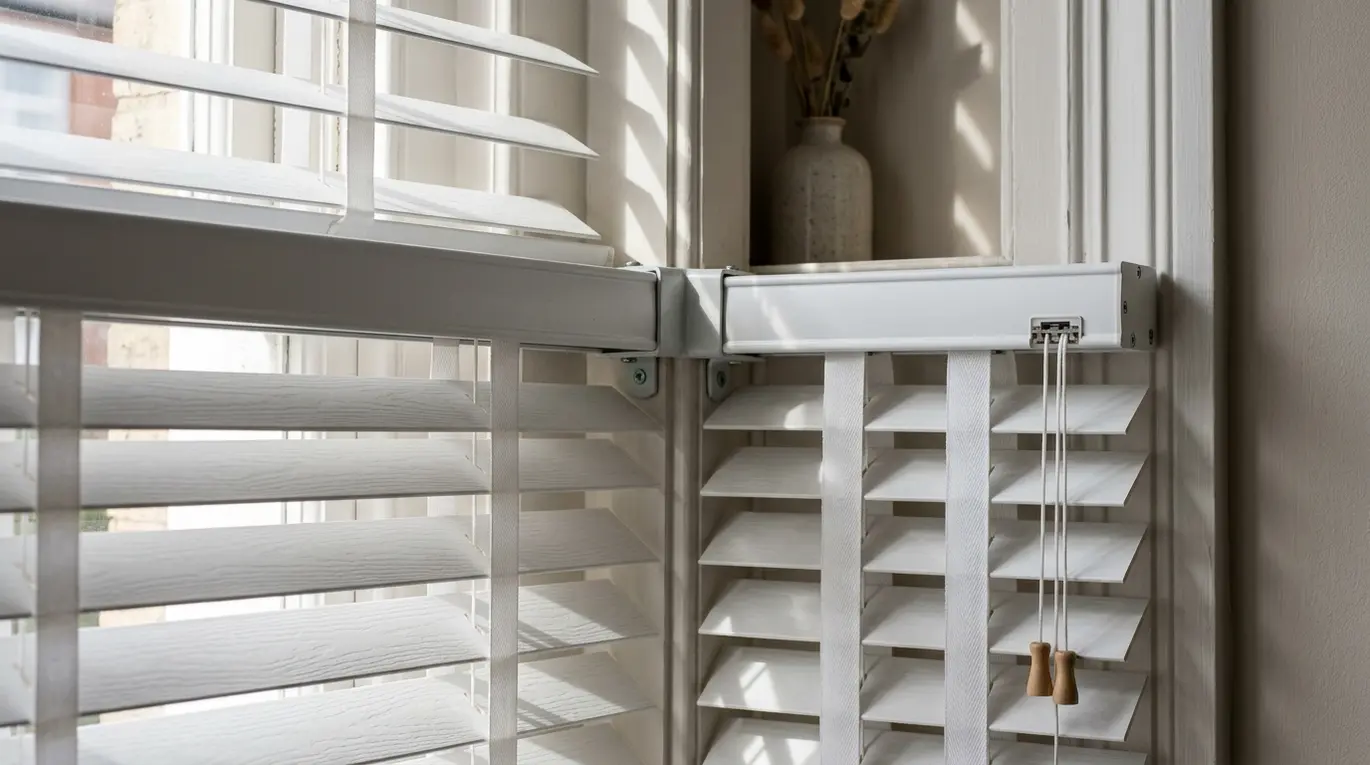
This image was generated with AI and may not always represent the product or service exactly.
Roman Blinds: Soft, Tailored Warmth For Classic Bays
Roman blinds add refined texture and a neat stack that flatters period joinery. In bays you can:
- Fit one Roman on each facet to follow the curve and minimise light gaps (most common).
- Use a single span only where the frame allows and the headrail can be properly supported.
- Lining choices: standard for living spaces, blackout for bedrooms; thermal interlining boosts insulation and drape.
- Operation: discreet motorisation is ideal for tall bays and improves child safety.
See fabrics and finishes on our roman blinds page.
Venetian Blinds: Precise Tilt Control And Crisp Lines
Venetians offer quick, precise tilt to balance daylight and privacy.
- Materials: real wood for warmth and heritage feel; faux wood for moisture resistance; aluminium for a slim, modern profile and tight stack.
- Proportions: 35–50 mm slats echo sash spacing without clutter; 35–40 mm suits narrow panes.
- Finishes: white and soft neutrals are timeless; woodgrains and greys complement painted joinery.
- Details: optional ladder tapes, child-safe controls, and privacy slats (reduced cord holes) on aluminium.
Browse styles on our venetian blinds page.
Light, Privacy And Heat: Real Nottingham Scenarios
West Bridgford terrace, street-facing lounge: tier-on-tier shutters keep the lower tier closed for privacy while top louvres pull in daylight. The frame helps reduce draughts in solid-wall homes and softens traffic noise.
Arnold corner dining bay, south/east aspect: café shutters on the lower sash for day privacy, paired with a neutral Roman above to calm morning glare. This keeps the room bright at lunch and cosy at night.
Bedrooms across the city: Romans with blackout lining give darkness and a snug feel. In rooms that run warm or humid, faux-wood Venetians layered with curtains add night-time privacy and extra insulation without fuss.
Measuring And Fitting Victorian Bays: Pro Tips
- Measure each facet at three points (top, middle, bottom) and note any taper. Check sill and head levels.
- Record angles between faces; a digital angle finder helps on splayed or curved bays.
- Allow clearance for sash lifts, locks, cords, parting beads, picture rails and radiators so fabrics and slats move freely.
- Inside vs outside recess: decide based on reveal depth and obstructions; outside mounts can reduce light gaps and bypass uneven plaster.
- Plan stacks: allow for Roman stack height and Venetian headrail depth; follow product deduction charts to minimise gaps.
- Shutters: templating ensures clean lines on splayed/curved bays; fix frames into solid points and seal where needed to cut draughts.
If in doubt, book our free expert measuring for accuracy in period properties. Here’s exactly how our made to measure blinds service works.
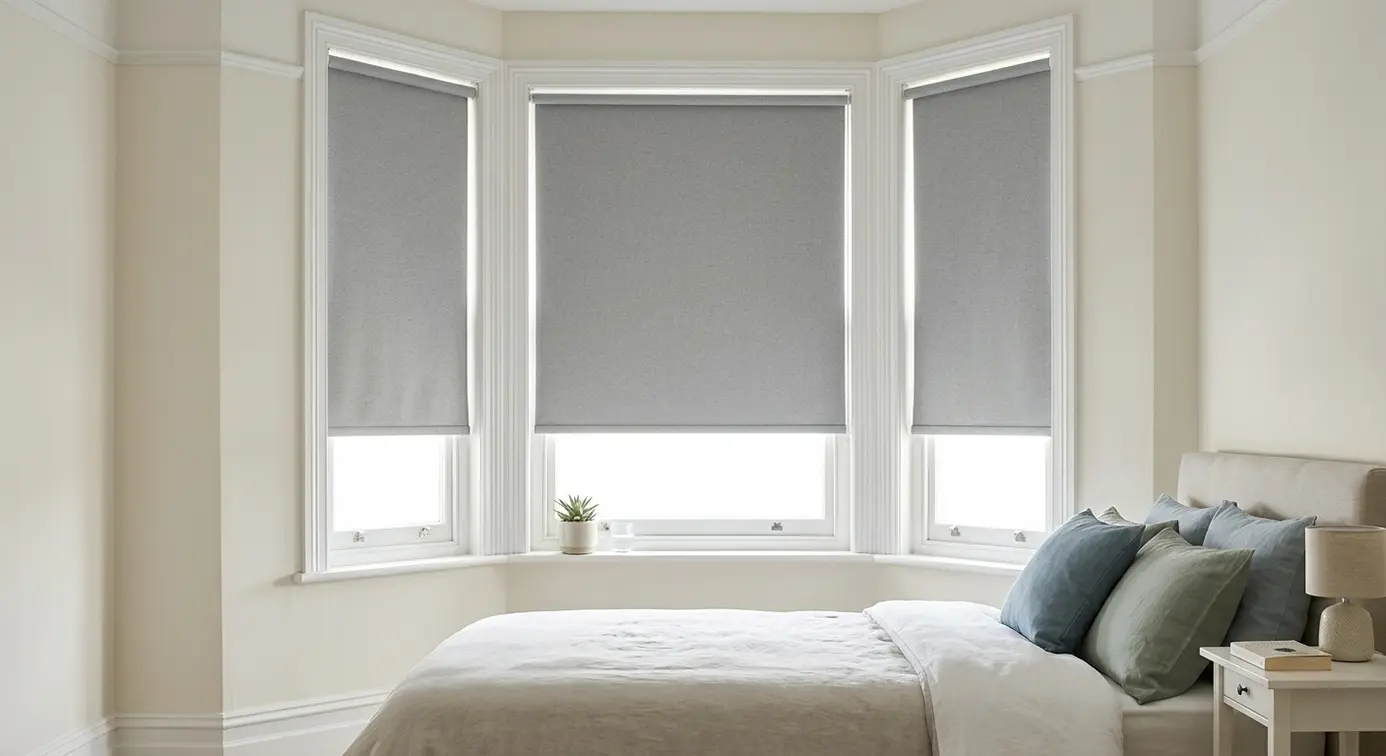
This image was generated with AI and may not always represent the product or service exactly.
Materials, Maintenance And Lifespan
- Venetians: keep fresh with a quick microfibre dust across slats; deep clean periodically with a damp cloth (faux/aluminium).
- Romans: spot-clean fabrics; use professional cleaning for stubborn marks; regular vacuuming with an upholstery tool helps.
- Shutters: wipe with a damp cloth and dry for a low-sheen finish.
- Best for humidity: PVC/composite shutters and quality faux-wood Venetians won’t warp—ideal for kitchens and bathrooms.
- Longevity: robust headrails, fixings and finishes extend life; our local team can adjust and service if needed.
Budget And Value: Shutters Vs Blinds For Bays
Shutters are typically the premium option, adding insulation and timeless kerb appeal. Romans sit mid-to-high depending on fabric and lining. Venetians offer strong value with excellent light and privacy control.
- What drives price: bay shape/complexity, size, materials, finishes and any motorisation.
- Ways to save without compromise: choose faux wood in moisture-prone rooms; pick durable standard fabrics with thermal interlining; keep finishes consistent across facets; consider café shutters where full coverage isn’t essential.
Our Nottingham Service: Simple, Local And Personal
Book a free home visit, see samples in your bay and get clear, honest pricing. Our friendly fitters measure accurately, install tidily and set up child-safe controls. We cover West Bridgford, Arnold and all Nottingham postcodes.
Ready to start? Get tailored advice today via contact us. We’ll help you choose blinds or shutters that respect your home’s character and make every day easier.
FAQs
What’s The Best Option For A Curved Victorian Bay?
Tier-on-tier shutters with careful templating work well, as do Romans fitted to each facet. Venetians also suit shallow curves if recess depth allows.
Will Blinds Or Shutters Damage My Original Sash Windows?
No—when measured and fitted correctly. We select fixings and frame options to avoid sash cords and parting beads and to protect original timber or plaster.
How Long Does Made-To-Measure Take?
Typical lead times are 2–4 weeks for most blinds and around 6–10 weeks for shutters. We’ll confirm timelines at survey and keep you updated.
Can I Mix Shutters And Blinds In One Bay?
Yes. A common pairing is café shutters below with a Roman above. It balances privacy, warmth and evening blackout while keeping the bay’s elegance.
Which Slat Or Louvre Size Suits Narrow Sashes?
For Venetians, 35–40 mm keeps lines crisp without crowding. For shutters, 63–76 mm louvres suit most Victorian proportions and maintain good light control.