 TrustATrader
Stay Cool in Summer: Why Conservatory Blinds Matter
Spring sunshine is lovely, but summer heat under glass builds fast. Conservatory roofs and large panes act like a greenhouse, pushing temperatures up and causing eye-straining glare. The right blinds reduce heat, soften light and protect furnishings from UV fade so you can enjoy the room all day.
This guide compares Pleated, Perfect Fit, and Day & Night blinds, plus the best fabric choices for roofs and side windows. It is written for local homes in Clifton, Long Eaton and Ilkeston, with practical tips that work in real British weather.
We are Best Blinds, a family-run team with 25+ years’ experience. We offer free home visits, precise measuring and expert fitting. Learn more about us and how we work.
Glare and Solar Gain: Quick, Plain-English Guide
Sunlight passes through glass easily. Once inside, it hits floors and furniture and turns into heat. That heat is slow to escape, so the room warms quickly. That is solar gain and it is why conservatories overheat.
Glare is different. It is the harsh brightness that makes eyes ache, washes out TV screens and fades fabrics. You cut glare with shading (dim-out or Day & Night fabrics). You cut heat by reflecting sunlight back out or by adding insulation before the room warms.
Top tip: close roof and side blinds before peak sun, then ventilate. A small gap high and low lets hot air out and cooler air in. See more comfort and cost tips in our guide to the energy saving benefits of modern blinds.
North, South, East or West? Orientation Tips That Work
South- and west-facing conservatories see the strongest sun, especially after lunch. Prioritise solar-reflective and thermal pleated fabrics on the roof, and use tensioned systems to keep fabric taut. On sides and doors, frames that minimise light gaps make a big difference.
East-facing rooms get bright mornings that can dazzle screens. Day & Night or dim-out pleated fabrics soften light while keeping the space usable. North-facing rooms benefit from gentle light control and insulation; thermal cellular pleated fabrics give a steadier, all-year feel and help with winter heat loss.
Have skylights or a lantern roof? Purpose-made roof or skylight blinds keep lines neat, reduce sagging on larger panes and improve control on high, hard-to-reach glass.
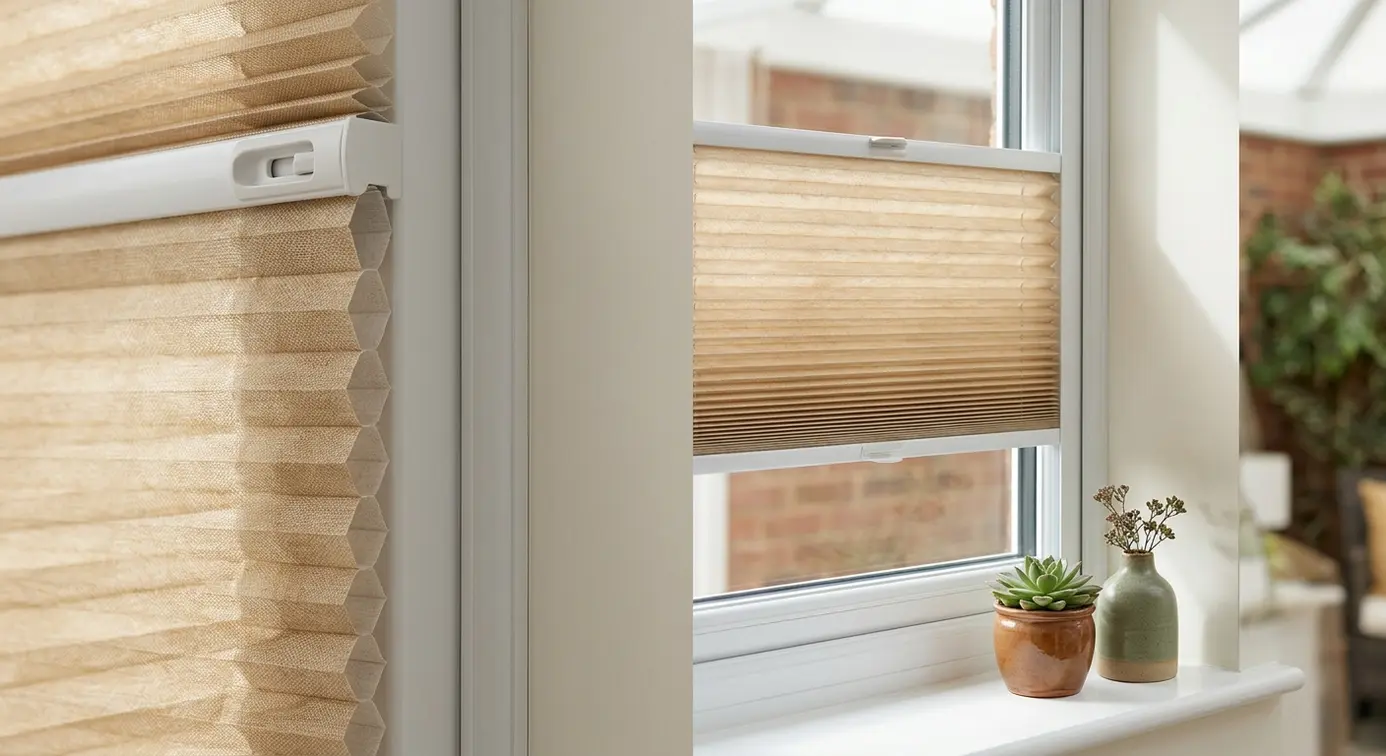
This image was generated with AI and may not always represent the product or service exactly.
Pleated Blinds: Neat Roof and Side Control
Pleated blinds are a go-to for conservatories and orangeries. They suit roofs, sides and tricky shapes (Victorian, Edwardian, lean-to, gables and tapers). Single-pleat fabrics are slim and discreet. Honeycomb (cellular) fabrics trap air in small pockets, adding insulation and improving summer heat rejection and winter warmth.
For roofs, tensioned rails keep fabric flat and reduce sag, even on polycarbonate or large glass panels. Shaped panels give a tidy finish around angles and apexes. With the right fabric, heat and glare drop sharply while the room still feels bright.
Pros: strong solar control, smart look, excellent fit on roofs and sides. Cons: roof work needs accurate measuring and professional fitting for best results. Explore options on our pleated blinds page.
Perfect Fit Blinds: No-Drill Frames for a Crisp Finish
Perfect Fit frames clip into the uPVC window bead, so there is no drilling into your frames. The blind sits within the frame and moves with the window or door. It looks built-in and keeps light gaps small, making it ideal for conservatory sides and doors.
They are excellent on French doors, patio sliders and tilt-and-turn windows. Doors still open freely, there is no banging fabric, and cordless options help with child safety and neatness.
Pros: neat, secure and practical on busy doors. Cons: bead shape and depth matter, so a survey is essential. See more on our Perfect Fit range.
Day & Night Blinds: Fine-Tune Light and Privacy
Day & Night (zebra) blinds use alternating sheer and opaque stripes. Slide the fabric to line up stripes for view-out, or close them for privacy and dimmer light. They shine on side windows where you need quick control through the day.
They cut glare for TV and laptop use without blacking out the room. Operation is smooth, and discreet battery motors are available for easy, wire-free, child-safe control. Note: these are for sides, not roofs.
See styles and colours on our Day & Night blinds page.
Thermal, Solar-Reflective and Blackout Fabrics: How to Choose
Solar-reflective backings (often pearlescent or metallised) bounce sunlight back out before it becomes heat. Thermal cellular fabrics add insulation, helping rooms stay cooler in summer and warmer in winter. Both options improve comfort and reduce energy use.
Blackout and dim-out fabrics improve privacy and screen comfort. For family spaces, choose moisture-resistant, easy-wipe finishes. For roofs on sunny aspects, reflective cellular fabrics usually give the best balance of glare reduction and heat control. The right fabric choice delivers more benefit than adding extra layers of blinds.
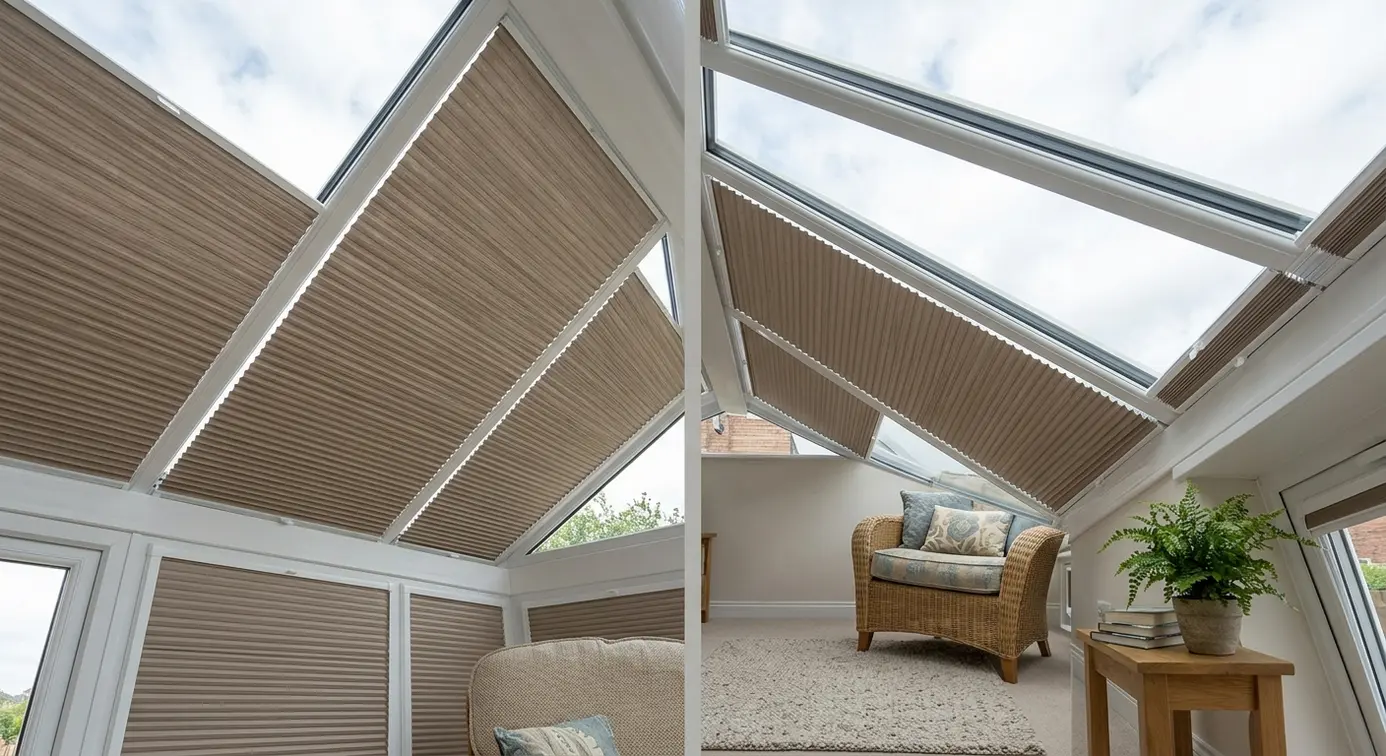
This image was generated with AI and may not always represent the product or service exactly.
Quick Chooser: Best Option by Problem and Budget
Not sure where to start? Use this quick guide.
- Overheating on south/west: cellular pleated with a reflective backing, prioritise the roof first.
- Glare on screens: Day & Night or dim-out pleated on side windows.
- Minimal light gaps on doors: Perfect Fit frames with pleated or Day & Night fabrics.
- Lanterns/skylights: purpose-made tensioned roof or skylight blinds.
- Budget: focus on roof blinds first; supply-only can suit handy homeowners. Premium: cellular upgrades and motorisation for convenience.
Our Made-to-Measure Process: Simple, Tidy and Reliable
Book a free home visit and we will bring samples to your conservatory. We discuss your room, sun pattern and budget, then take precise measurements, including roof and shaped panes.
Fitting is neat and careful, with compliant child-safe controls and a friendly handover. Lead times are prompt, pricing is clear, and aftercare is local. Read more about how our made to measure blinds service works.
Real Local Examples and Easy Care Tips
Clifton: a south-facing roof was overheating. Reflective cellular pleated blinds cut glare and made the room comfortable on hot days. Slim rails kept the roof tidy.
Long Eaton: busy French doors needed shade without flapping fabric. Perfect Fit pleated blinds sat flush, so the doors opened smoothly and light gaps were minimal.
Ilkeston: a home office struggled with morning glare. Day & Night blinds softened the light so the laptop was easy to see, while keeping a relaxed, modern look.
Care: dust lightly with a soft brush or microfibre, then spot-clean with a damp cloth. Avoid harsh cleaners on coated or reflective fabrics.
Next Steps: Beat the Heat with a Free Home Visit
If you are in Clifton, Long Eaton or Ilkeston, we would love to help. Book a free home visit, browse fabrics, and request brochures. Expect friendly advice, no pressure, and expert fitting from Best Blinds.
Ready to get started? Contact us to arrange your appointment.
FAQs
Do conservatory blinds really make it cooler?
Yes. Reflective and thermal fabrics reduce solar gain and slow heat build-up. Shading the roof early in the day makes the biggest difference.
What is best for a south-facing conservatory roof?
Cellular pleated blinds with a reflective backing. They insulate well and bounce sunlight before it turns into heat.
Do I need blinds on the roof and the sides?
Roof blinds tackle heat most effectively. Side blinds add glare control and privacy, and complete the look.
Can you fit blinds to shaped or angled panes?
Yes. Made-to-measure pleated systems handle gables, triangles and tapers with tidy, tensioned rails.
Are Perfect Fit frames suitable for all uPVC windows?
They suit most, but bead type and depth must be checked. We confirm compatibility during the survey.
Can conservatory blinds be motorised?
Many styles can use discreet battery motors for easy, wire-free control. It is convenient and child-safe.